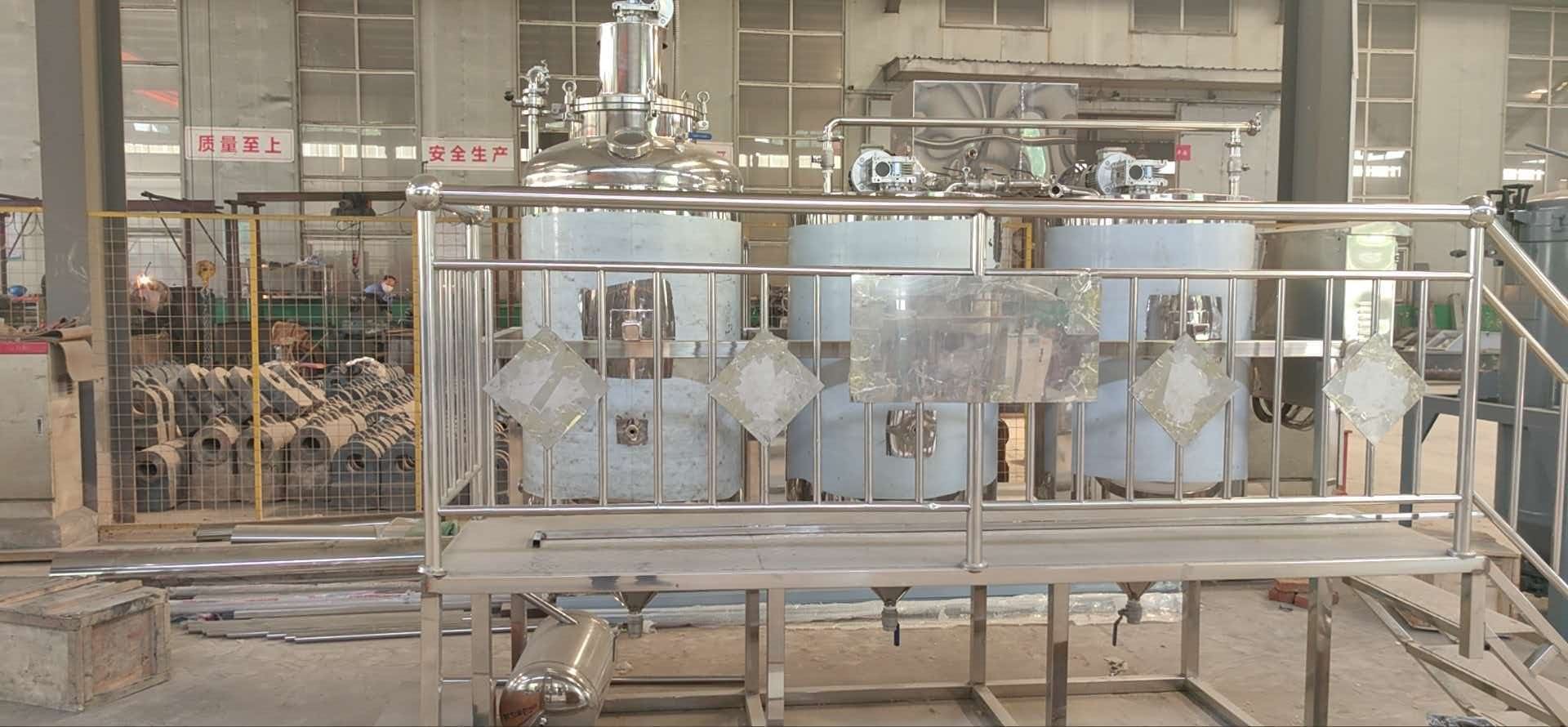
A small refinery is not a scaled-down version of a large one. It is a different design problem: the equipment has to do the same chemistry with less instrumentation, fewer operators and less margin for error, and it has to fit into a building that was probably not designed for it.
If you are setting up a small refining operation — typically alongside a pressing line, or as a step up from selling crude oil — these are the decisions to settle before you buy anything.
1. Decide what you are refining and what you are selling
Start at the output, not the input. Two questions determine most of the design:
- What oil is going in? Pressed vegetable oil from your own press, purchased crude oil, or animal fat. Each carries a different load of gums, colour and free fatty acids, and that load decides whether you need neutralisation and dewaxing in addition to degumming, bleaching and deodorising.
- What specification is coming out? Ask the buyer — or ask what your retail product has to do in the bottle. Colour, free fatty acid content, moisture and appearance at low temperature are the parameters that usually matter. Refining to a specification is a different job from refining until the oil looks nice.
2. Fix the capacity against a real shift pattern
Refining is a batch or semi-continuous process at small scale, so capacity is not one number. What matters is:
- Kilograms or tonnes of finished oil per day.
- How many batches per shift, and how long each batch actually takes including heating, holding, filtering and cooling.
- How much of the day is spent cleaning and changing over between batches.
A plant quoted on “one batch per hour” that takes three hours in practice is a plant that cannot meet its contract. Work the times through with the supplier in writing, batch by batch.
3. Utilities decide more of the layout than the machines do
Refining needs heat, vacuum, cooling and power, and at small scale the utilities are frequently the binding constraint:
- Heat. Steam is conventional; electrically heated systems avoid a boiler but raise the electrical demand sharply. Decide which your building can support.
- Vacuum. Needed for bleaching and deodorising, and it is not a small utility. It determines whether the process runs at oil-friendly temperatures or at temperatures that damage the product.
- Cooling water. Refined oil has to be cooled after deodorising, and cooling capacity is routinely under-planned.
- Electrical supply. Check what the site can actually deliver before specifying electrically heated equipment. Upgrading a supply takes longer than building the plant.
- Compressed air and water. Small requirements individually, both forgotten regularly.
4. Tankage and materials handling
Small refineries fail on logistics more often than on chemistry. Plan for:
- Feed and product tanks, sized for the largest delivery and the largest order, not for one batch.
- Bleaching clay storage and dosing. Clay arrives in bags or bulk, has to be kept dry and has to be dosed accurately.
- Spent clay and filter cake handling. This is a waste stream that is oily, hot and bulky. Decide early where it goes, because a plant with nowhere to put it stops.
- Finished oil filling and packaging, if you are packing rather than selling in bulk. This is usually forgotten until the first order.
5. Waste streams and their permissions
Refining produces waste, and the waste determines what permits you need:
- Spent bleaching clay, which retains oil and has to be handled and disposed of properly.
- Soapstock, if you are chemically neutralising.
- Wastewater from washing, cooling and cleaning.
- Volatile compounds extracted during deodorising, which have to be managed rather than vented carelessly.
Check local requirements early. Discovering a waste-handling requirement after the plant is installed is expensive; discovering it before is a line item.
6. Layout and materials of construction
Build the layout around gravity and maintenance access, not around the building you happen to have. Two practical points:
- Stainless steel in contact parts. Refined oil is a food product, and carbon steel introduces both hygiene problems and metal contamination.
- Service access. Filters, pumps and vacuum equipment need room to be opened and cleaned. A layout that saves floor space by burying the filter in a corner will cost more in downtime than it saved in rent.
7. People and quality control
A small refinery normally needs a small team — but it does need one person who owns quality, and it needs a way to measure it. As a minimum:
- Moisture, free fatty acid content and colour measurement, done routinely and recorded.
- A documented procedure for each stage, so that a good batch can be repeated and a bad one diagnosed.
- Batch records that tie incoming oil to finished product. Buyers in food supply chains ask for this.
8. Phase it, but do not build the wrong thing first
Degumming, bleaching and deodorising sit at the core. Dewaxing, neutralisation, packaging and laboratory equipment can be added later — provided the plant was specified to accept them. What you cannot add later cheaply is the wrong material of construction, inadequate vacuum, or utilities that cannot support the equipment you will eventually need.
Equipment
Our small oil refining unit covers degumming, bleaching and deodorising for plants that press their own oil, and the surrounding refining vessels, tanks and auxiliary machines are covered in the equipment range. Project photographs show how these lines are laid out in practice.
Frequently asked
Can I run a small refinery alongside an existing press?
Yes, and it is the most common starting point — refining your own pressed oil captures the margin between crude and edible oil. The main constraint is tankage and utilities rather than the refining equipment itself.
Do I need a laboratory?
You need more than a laboratory: you need routine measurement of a few key parameters, done every batch and recorded. Moisture, free fatty acid content and colour are the practical minimum, and they can be measured with simple equipment if the discipline is there.
How long does it take to get a small refinery running?
The equipment lead time is one part of it; civils, utilities and operator training are usually the longer part. Start with the site works and the utility connections, and plan the equipment delivery around them — not the other way round.
Key points to take away
- Start from the specification, not the equipment list. What your buyer tests decides which stages you need; the stages then decide the machines.
- Utilities bind the layout. Heat, vacuum, cooling and electrical capacity are usually the real constraint at small scale, and they are harder to change later than the process equipment.
- Vacuum is not a detail. It is the single item most often skimped on and most often blamed for poor product quality afterwards.
- Tankage, clay handling and waste routes are plant capacity. A refinery with nowhere to put spent clay or finished oil stops, whatever the reactor can do.
- Stainless steel in contact parts. Refined oil is a food product; carbon steel is both a hygiene problem and a contamination source.
- One person owns quality, and batches are recorded. Repeatability is what allows you to sell to a specification, and records are what buyers in food supply chains ask for.
- Phase it, but not the items that are expensive to retrofit. Materials of construction, vacuum capacity and utility headroom belong in phase one.
A small refinery succeeds on discipline as much as on equipment. The plants that fail are rarely the ones with the wrong reactor — they are the ones that never defined the specification, the waste route or the utility requirement before ordering.
Tell us what you are refining
Send us the oil you will refine, the volume per day and the specification you have to meet, and we will come back with the stages you need, the utilities they require and a layout. Request a quote.