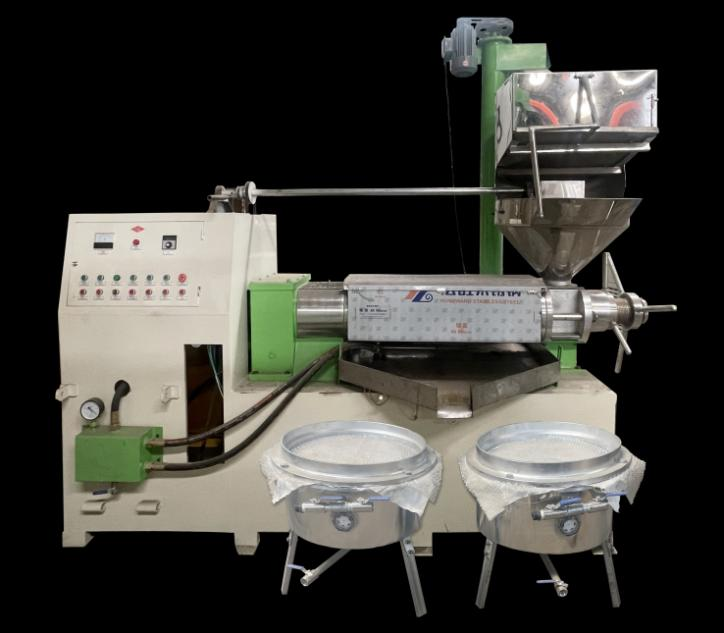
There are only two ways to get vegetable oil out of an oilseed at industrial scale: press it, or dissolve it out with a solvent. Everything else — the conveyors, the cookers, the filters, the tanks — exists to support one of those two routes. Choosing between them is the first real decision in an oil plant project, and it shapes the capital cost, the site, the staffing and the product you can sell.
Step one: prepare the seed, whichever route you choose
Neither route works on seed straight from the sack. Preparation is where a large part of the oil recovery is actually won or lost:
- Cleaning. Stones, sand, plant matter and metal have to come out. A stone that reaches a press damages the screw; metal damages the gearbox.
- Dehulling. Removing hulls raises the oil content of what goes into the press and keeps hull material out of the meal.
- Cracking and flaking. Seed is broken and rolled into flakes so that oil cells are exposed. Flake quality is one of the most underrated variables in a pressing plant.
- Conditioning and cooking. Heat and moisture are adjusted before pressing. Hot pressing generally releases more oil than cold pressing on the same material, at the cost of a darker, more processed oil.
If your material is soft, high-oil and easy to press, preparation can be simple. If it is fibrous or hard, preparation is where the engineering effort goes. We supply cleaning, conveying and conditioning machines alongside the presses themselves — see the auxiliary equipment range.
Route one: mechanical pressing
A screw press squeezes the prepared material through a rotating worm inside a cage. Oil drains out through the cage bars; the remaining solids leave as cake.
Within mechanical pressing there are two common operating modes:
- Full pressing (single pressing). The press takes out as much oil as it can in one pass. The line is comparatively simple, the capital cost is lower, and there are no solvents on site. This is how most first plants start.
- Cold pressing. The material is pressed without the usual heating step. Yields are lower, but the oil retains more of its natural character — which matters if you are selling a premium edible oil rather than a commodity.
The by-product is cake or meal, which in most plants is a saleable product rather than waste. Its value partly depends on how much oil is left in it, which is why buyers of meal and buyers of oil care about different numbers from the same press.
Route two: pre-pressing followed by solvent extraction
In a solvent plant, the press does not try to remove all the oil. It removes part of it as a pre-press, and the partially de-oiled cake goes on to be washed with solvent, which dissolves the remaining oil. The solvent is then recovered and recycled, and the meal is desolventised before it leaves the plant.
This route recovers more of the oil in the seed, and it is the standard approach where large volumes of a single material are processed continuously. The trade-offs are real:
- Complexity. A solvent plant is a chemical process plant, not a workshop of machines. It needs far more engineering, instrumentation and control.
- Scale. The economics only work above a substantial throughput. Below that, the additional recovery does not pay for the additional plant.
- Site and permissions. Solvent handling brings safety, fire and environmental obligations that vary by country and are much heavier than for a press alone.
- People. It needs operators with process training, not machine operators.
How to choose
Work through these in order:
- What is your throughput? Below a certain size, mechanical pressing is the only route that makes sense economically. Ask a supplier to show you where that boundary sits for your material rather than assuming.
- What are you selling? Premium cold-pressed oil, commodity crude oil, cake for feed, or meal — each points at a different route.
- What can the site support? Solvent storage, fire separation, effluent handling and a larger electrical supply all have to exist before the plant can be built.
- How much can you operate? A simple pressing line can be run by a small team. A solvent plant cannot.
- Do you expect to expand? If you may scale later, specify the pressing stage so the press can later run as a pre-press. That single decision can save you buying the front end twice.
What each route means for your product and your plant
It is tempting to treat the two routes as two ways of producing the same thing. They are not. The route you choose changes what you sell, what you need on site, and what your running costs look like.
- The meal. Solvent extraction takes more oil out of the cake, so the meal leaves at a lower residual oil content — normally what a feed buyer importing to a specification is looking for. A full-pressing plant leaves more oil in the cake, which raises its energy value but may put it outside a low-oil specification. If your business model is meal exports, this single point can decide the route for you.
- The oil. Pressed oil, and especially cold-pressed oil, retains more of the material’s natural character. Solvent-extracted oil has been through more processing and normally needs more refining before it is saleable as edible oil. If you are selling a premium or branded oil, pressing is usually the right front end.
- The site. A pressing line is a workshop. A solvent plant is a chemical process plant: solvent storage, fire separation, vapour handling, effluent treatment, instrumentation and a substantially larger electrical supply. Some sites simply cannot host one, whatever the economics say.
- The people. Pressing lines are run by machine operators who can be trained on site. Solvent plants need process operators and a maintenance capability that most first-time plant owners do not have.
- The cost structure. Pressing trades lower capital for higher cost per tonne of oil produced — more wear parts, more maintenance, more oil left in the cake. Solvent extraction trades much higher capital and compliance cost for better recovery. The crossover depends on throughput, and it is worth asking a supplier to model it for your tonnage rather than assuming.
The equipment each route implies
Mechanical pressing: intake and cleaning, cracking and flaking where the material needs it, conditioning or cooking, the screw press or presses, oil filtration or settling, cake conveying and storage, and tanks for crude oil. Everything on that list is workshop equipment, and it can be built up in stages as the business grows.
Pre-pressing plus solvent extraction: the same front end, followed by extraction, solvent recovery, desolventising and toasting of the meal, plus the safety and effluent systems that go with solvent handling. The front end is smaller than in a full-pressing plant, but nothing downstream of it can be added later without rebuilding.
That is the practical argument for specifying the pressing stage generously even if you start with full pressing: it is the one part of the plant that can serve both routes.
What happens after extraction
Whichever route you take, the oil that comes out is crude oil. It still carries gums, colour bodies, free fatty acids and odour compounds, and it has to be filtered or refined before most buyers will take it. Crude oil can be sold, but the price is lower and the buyer pool is narrower.
Our process solutions pages set out how pressing, filtration, refining and waste-oil treatment fit together, and the equipment range lists the machines that make up each stage. If you tell us the material and the product you want to sell, we can tell you which route fits and what it needs. Request a quote.