Category: Industry news

  • Food Waste Treatment Technologies Compared

    Food Waste Treatment Technologies Compared

    Food waste is not one material. Kitchen waste from a canteen, waste from a food processing line, and used cooking oil are three different problems wearing the same name, and the right technology for one is usually the wrong technology for the others.

    The four routes below cover the great majority of installations. Which one suits you depends less on the technology than on what is in your waste, what output you can actually sell or use, and what your site and your permits allow.

    Route 1: separation and volume reduction

    Most food waste is mostly water. Separating solids from liquids and recovering the oil fraction reduces volume before anything else is attempted, and it is usually the cheapest tonne saved.

    • Solid-liquid separation removes free liquid and produces a solids fraction that is smaller, drier and cheaper to move or process further.
    • Oil-water separation recovers the fat and oil fraction, which is the part of kitchen waste with real resale value — as a feedstock for further processing or for technical uses.
    • Size reduction ahead of separation improves both, because whole food waste does not dewater well.

    This route is as much a pre-treatment step as a disposal route, and it is the sensible first stage under almost any of the others.

    Route 2: drying and conversion to feed or fertiliser

    Where the waste is food-grade and consistent, drying it produces a material that can be used as animal feed or as a soil amendment, after any required processing and approvals. The attraction is that waste becomes a product rather than a disposal cost. The constraints are real:

    • Consistency. Feed users need a predictable product. Restaurant waste varies daily; food factory waste often does not.
    • Contamination. Packaging, cutlery, plastics and cleaning chemicals all have to be excluded upstream.
    • Regulation. Feeding food waste to animals is restricted or prohibited in many jurisdictions, and the rules change. Check before designing.
    • Energy. Drying is energy-intensive. If the waste is 70 % water, you are paying to evaporate 70 % of what you collect.

    Route 3: aerobic composting

    Composting is the lowest-technology route and the easiest to start. Vegetable and fruit waste, garden material and many catering wastes compost well with turning and adequate aeration.

    Strengths: low capital, simple operation, and a product that is usually acceptable locally.
    Weaknesses: large land area, weeks of retention time, odour if managed badly, and it does not cope well with meat, fats and oils in quantity. Emission control and leachate handling are frequently underestimated, and both are the parts neighbours notice.

    Route 4: anaerobic digestion

    Anaerobic digestion converts organic material into biogas in a sealed vessel. It captures energy from waste and handles wet waste streams that composting struggles with, including fats and oils in moderation.

    Strengths: energy recovery, a contained process with controlled odour, and a digestate that can be used as a soil amendment.
    Weaknesses: by far the highest capital and technical complexity of the biological routes; sensitive to feedstock variation and to contamination that inhibits the biological process; and it needs an operator who understands the process, not just the equipment.

    Route 5: thermal treatment and energy recovery

    Where waste cannot be reused materially, controlled thermal treatment recovers energy and destroys contaminants. It brings the heaviest capital, the tightest emission limits and the most demanding permitting of any route, and it is normally only justified at scale or where no material route exists.

    Comparing the routes honestly

    Dimension Separation Drying to feed Composting Anaerobic digestion Thermal
    Handles wet waste Yes Poorly Poorly Well Yes
    Capital cost Low Medium Low High Very high
    Operating skill needed Low Medium Low High High
    Sellable output Recovered oil Feed / fertiliser Compost Biogas + digestate Energy
    Land area Small Small Large Medium Small
    Permitting burden Light Medium Medium High Very high

    None of these columns is a recommendation. They are the trade-offs you are choosing between.

    How to choose

    1. What is actually in the waste? Get a composition figure — oil content, water content, contamination — over several weeks, not one sample.
    2. What output can you sell or use? Recovered oil, compost, feed, biogas or heat. If there is no market for the output, the process is a cost, not a business.
    3. What does the site allow? Land, odour sensitivity, neighbours, access for collection vehicles and the space for the equipment.
    4. What can you operate? A composting pad and an anaerobic digester demand completely different levels of technical capability.
    5. What does the regulation require? Check the rules on the waste you handle and the output you produce before you buy anything.

    Where separation equipment fits

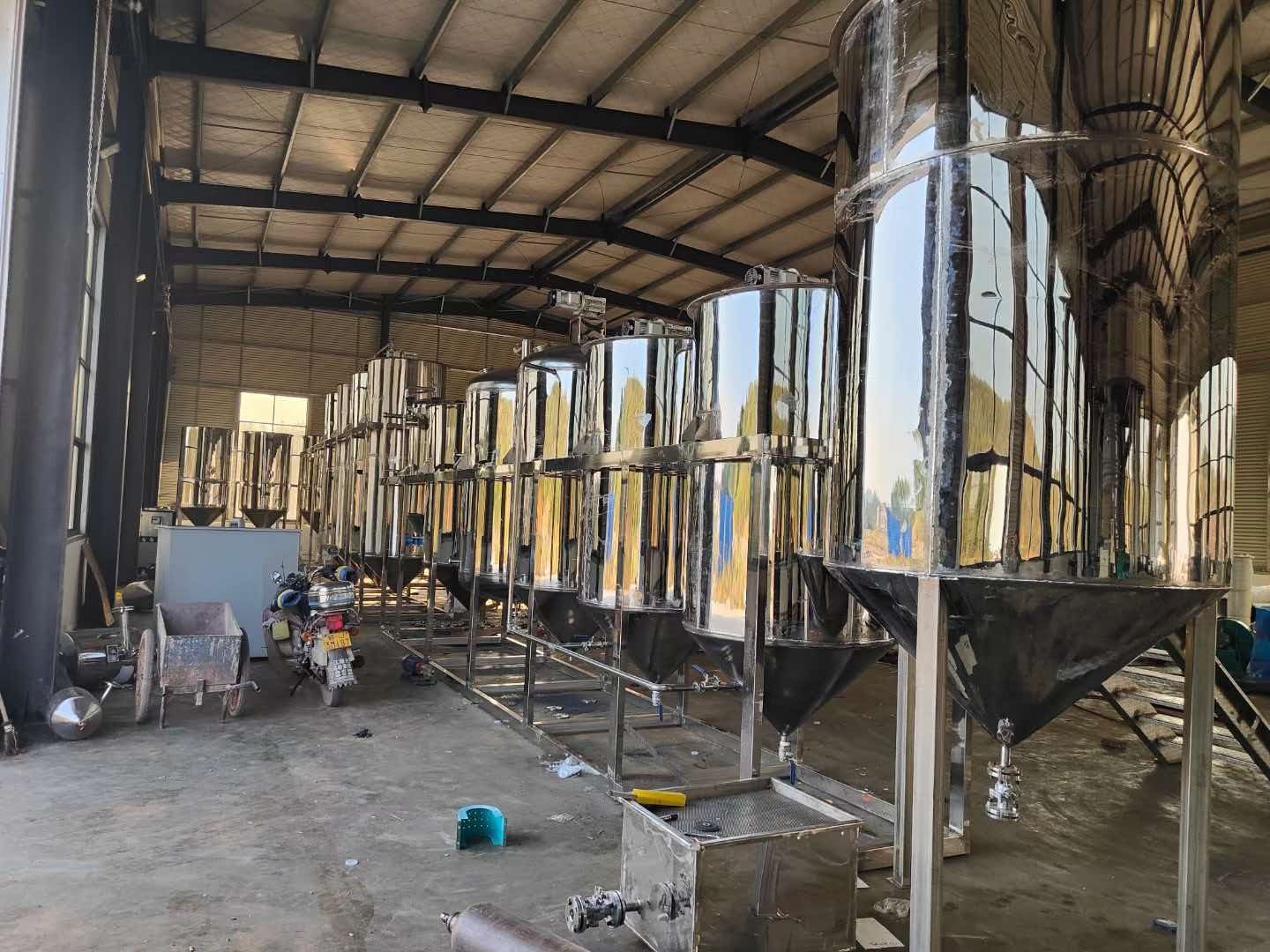
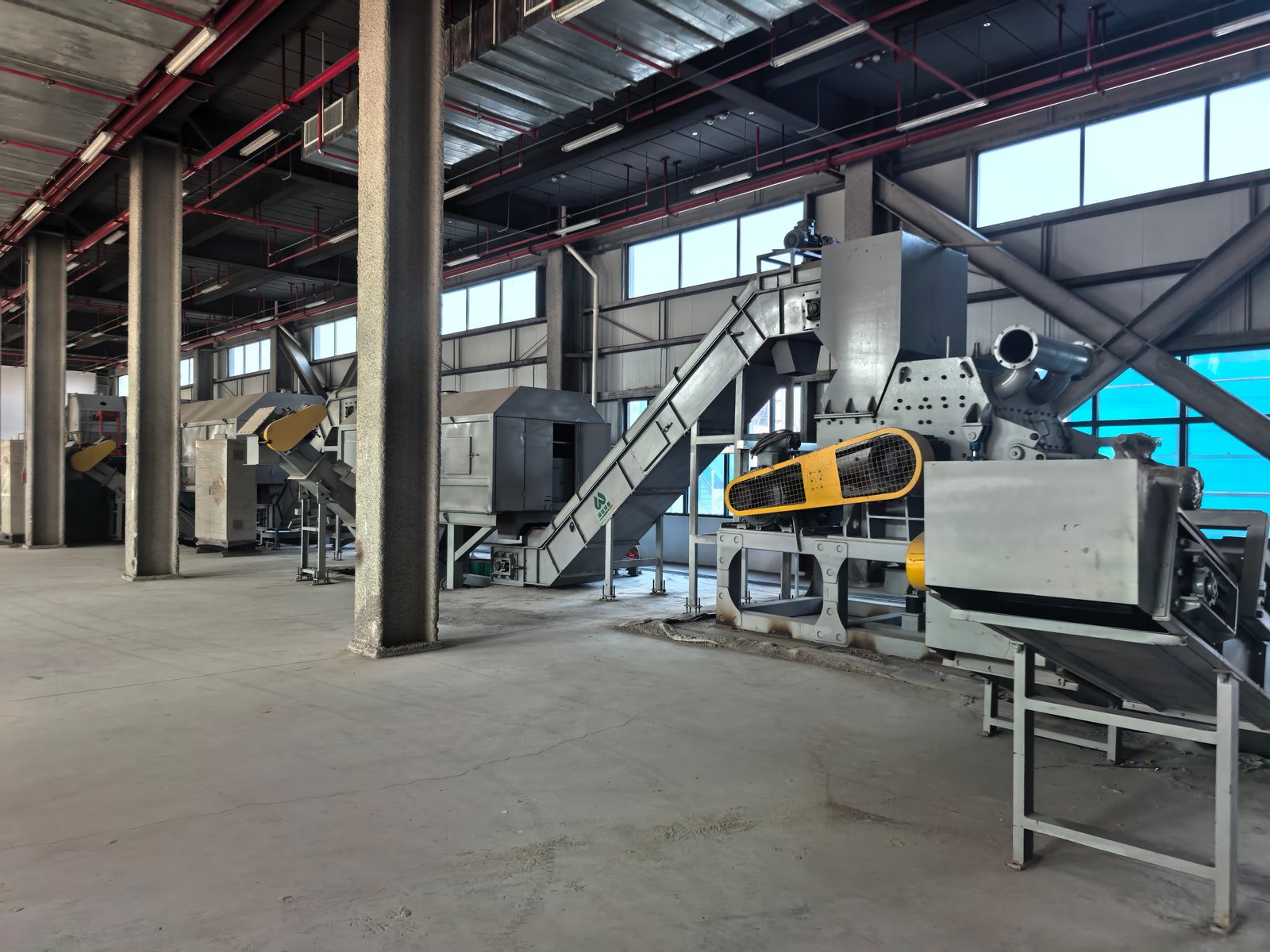
    Almost every route benefits from getting the water out and the oil out first. We build the machinery for that stage — solid-liquid and oil-water separation, size reduction, decanter centrifuges, conveyors, tanks and odour control equipment — see the equipment range and the auxiliary equipment pages, and the process solutions for the waste-to-biodiesel route.

    Frequently asked

    Can food waste treatment make money on its own?

    Sometimes, and mostly through the oil fraction. Recovering oil from kitchen and food processing waste is where the recoverable value usually sits; the rest of the material is generally a volume and compliance problem. Be sceptical of business cases that assume all of it becomes a product.

    What is the smallest sensible installation?

    At small scale, separation and volume reduction usually pay back first, because they cut transport and disposal costs immediately and require modest equipment. Composting or digestion are worth considering once you have enough consistent material to justify the plant and the permits.

    Where does odour control fit?

    Odour is the complaint that closes installations. It belongs in the original design — enclosed handling, controlled ventilation and treatment of exhaust air — rather than being retrofitted after the neighbours have complained. We supply odour control equipment as part of these lines.

    Key points to take away

    • Food waste is not one material. Kitchen waste, processing waste and used cooking oil need different treatment, and one plant rarely suits all three.
    • Separation comes first in almost every route. Removing water and recovering oil reduces volume and recovers the part of the waste that carries real value.
    • Get composition data over weeks, not one sample. Sizing a plant on a single sample is how plants end up unable to handle their own feedstock.
    • The output has to have a market. Compost, feed, biogas or recovered oil — if nobody wants it or uses it, the process is a cost with extra steps.
    • Match the route to your operating capability. A composting pad and an anaerobic digester demand completely different levels of technical skill.
    • Check the permits before you buy. Restrictions on feeding food waste to animals and on waste handling differ by jurisdiction and change over time.
    • Design odour control in, do not retrofit it. Odour complaints are what close installations, and they are much cheaper to prevent than to cure.

    There is no universally best technology here, only the route that fits your waste, your site, your permits and the people who will run the plant.

    Tell us what your waste is

    Send us the composition of your waste, the volume per day and what you want to come out the other end, and we will tell you which route fits and what equipment it needs. Request a quote.
  • Setting Up a Small-Scale Oil Refinery: What to Plan For

    Setting Up a Small-Scale Oil Refinery: What to Plan For

    A small refinery is not a scaled-down version of a large one. It is a different design problem: the equipment has to do the same chemistry with less instrumentation, fewer operators and less margin for error, and it has to fit into a building that was probably not designed for it.

    If you are setting up a small refining operation — typically alongside a pressing line, or as a step up from selling crude oil — these are the decisions to settle before you buy anything.

    1. Decide what you are refining and what you are selling

    Start at the output, not the input. Two questions determine most of the design:

    • What oil is going in? Pressed vegetable oil from your own press, purchased crude oil, or animal fat. Each carries a different load of gums, colour and free fatty acids, and that load decides whether you need neutralisation and dewaxing in addition to degumming, bleaching and deodorising.
    • What specification is coming out? Ask the buyer — or ask what your retail product has to do in the bottle. Colour, free fatty acid content, moisture and appearance at low temperature are the parameters that usually matter. Refining to a specification is a different job from refining until the oil looks nice.

    2. Fix the capacity against a real shift pattern

    Refining is a batch or semi-continuous process at small scale, so capacity is not one number. What matters is:

    • Kilograms or tonnes of finished oil per day.
    • How many batches per shift, and how long each batch actually takes including heating, holding, filtering and cooling.
    • How much of the day is spent cleaning and changing over between batches.

    A plant quoted on “one batch per hour” that takes three hours in practice is a plant that cannot meet its contract. Work the times through with the supplier in writing, batch by batch.

    3. Utilities decide more of the layout than the machines do

    Refining needs heat, vacuum, cooling and power, and at small scale the utilities are frequently the binding constraint:

    • Heat. Steam is conventional; electrically heated systems avoid a boiler but raise the electrical demand sharply. Decide which your building can support.
    • Vacuum. Needed for bleaching and deodorising, and it is not a small utility. It determines whether the process runs at oil-friendly temperatures or at temperatures that damage the product.
    • Cooling water. Refined oil has to be cooled after deodorising, and cooling capacity is routinely under-planned.
    • Electrical supply. Check what the site can actually deliver before specifying electrically heated equipment. Upgrading a supply takes longer than building the plant.
    • Compressed air and water. Small requirements individually, both forgotten regularly.

    4. Tankage and materials handling

    Small refineries fail on logistics more often than on chemistry. Plan for:

    • Feed and product tanks, sized for the largest delivery and the largest order, not for one batch.
    • Bleaching clay storage and dosing. Clay arrives in bags or bulk, has to be kept dry and has to be dosed accurately.
    • Spent clay and filter cake handling. This is a waste stream that is oily, hot and bulky. Decide early where it goes, because a plant with nowhere to put it stops.
    • Finished oil filling and packaging, if you are packing rather than selling in bulk. This is usually forgotten until the first order.

    5. Waste streams and their permissions

    Refining produces waste, and the waste determines what permits you need:

    • Spent bleaching clay, which retains oil and has to be handled and disposed of properly.
    • Soapstock, if you are chemically neutralising.
    • Wastewater from washing, cooling and cleaning.
    • Volatile compounds extracted during deodorising, which have to be managed rather than vented carelessly.

    Check local requirements early. Discovering a waste-handling requirement after the plant is installed is expensive; discovering it before is a line item.

    6. Layout and materials of construction

    Build the layout around gravity and maintenance access, not around the building you happen to have. Two practical points:

    • Stainless steel in contact parts. Refined oil is a food product, and carbon steel introduces both hygiene problems and metal contamination.
    • Service access. Filters, pumps and vacuum equipment need room to be opened and cleaned. A layout that saves floor space by burying the filter in a corner will cost more in downtime than it saved in rent.

    7. People and quality control

    A small refinery normally needs a small team — but it does need one person who owns quality, and it needs a way to measure it. As a minimum:

    • Moisture, free fatty acid content and colour measurement, done routinely and recorded.
    • A documented procedure for each stage, so that a good batch can be repeated and a bad one diagnosed.
    • Batch records that tie incoming oil to finished product. Buyers in food supply chains ask for this.

    8. Phase it, but do not build the wrong thing first

    Degumming, bleaching and deodorising sit at the core. Dewaxing, neutralisation, packaging and laboratory equipment can be added later — provided the plant was specified to accept them. What you cannot add later cheaply is the wrong material of construction, inadequate vacuum, or utilities that cannot support the equipment you will eventually need.

    Equipment

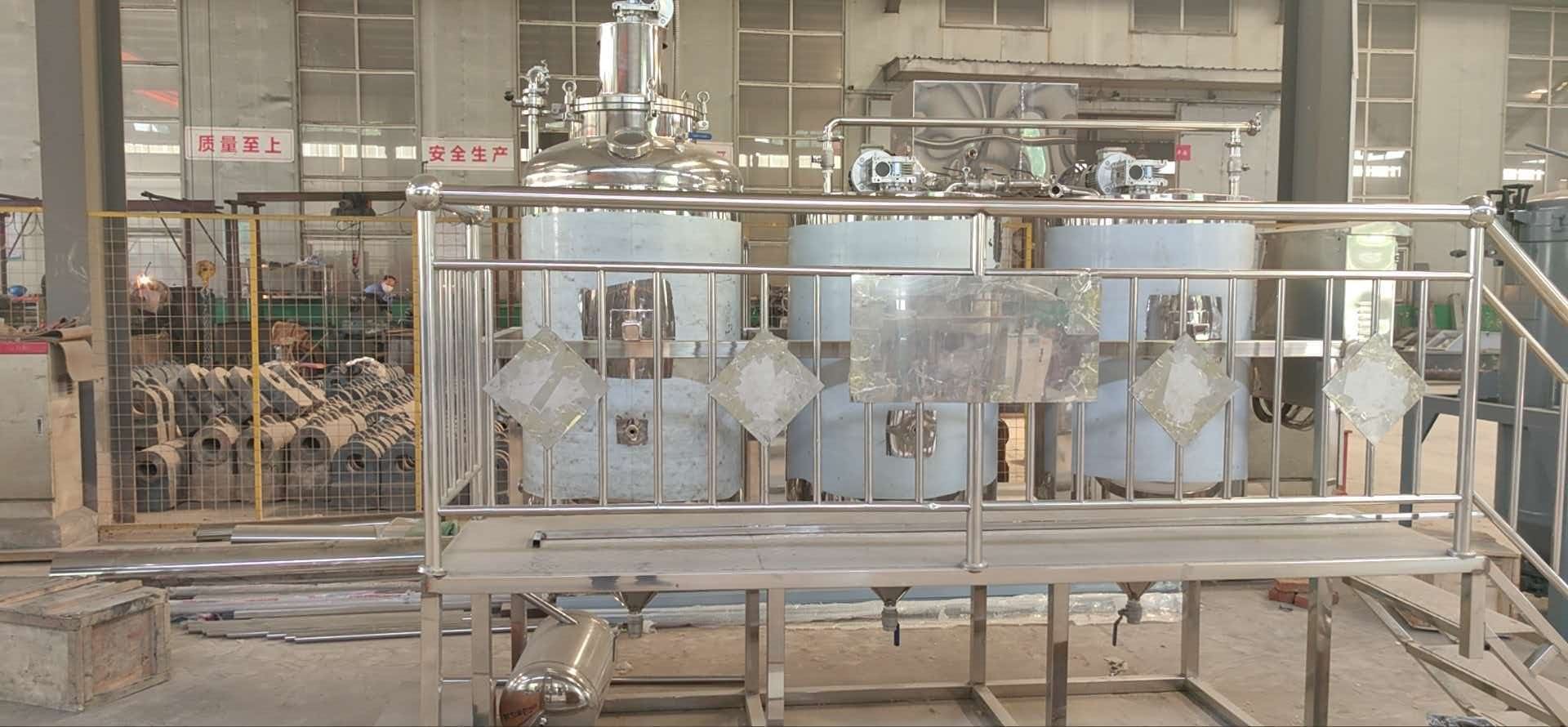
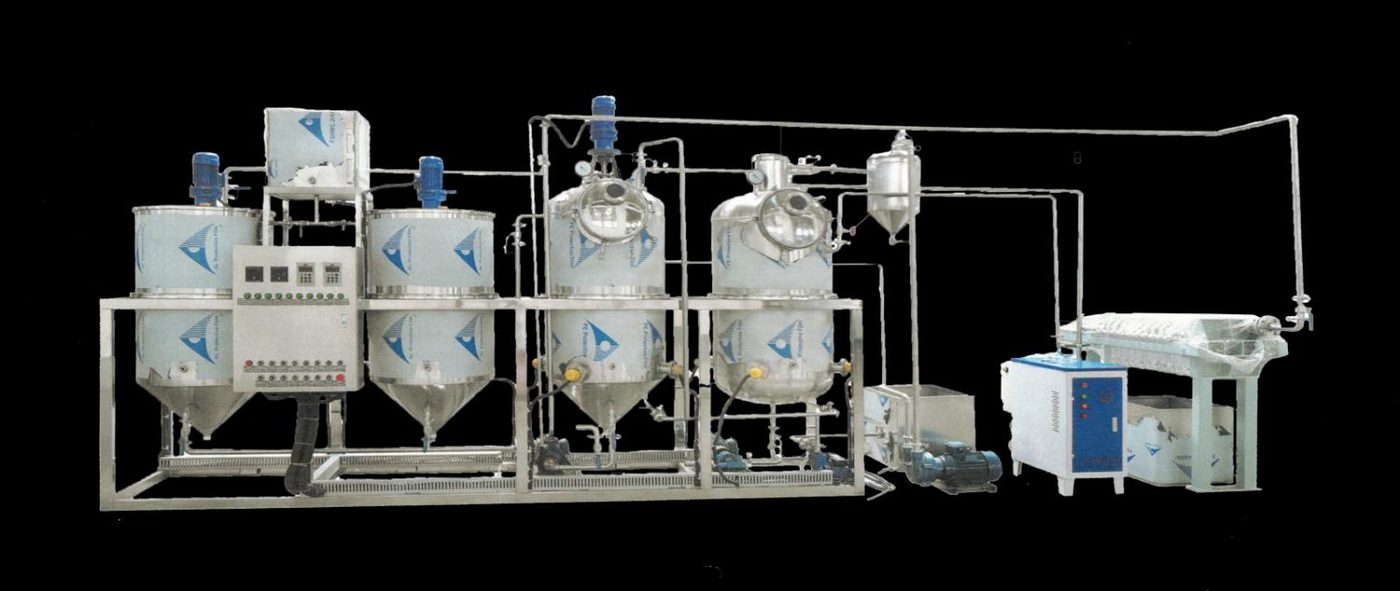
    Our small oil refining unit covers degumming, bleaching and deodorising for plants that press their own oil, and the surrounding refining vessels, tanks and auxiliary machines are covered in the equipment range. Project photographs show how these lines are laid out in practice.

    Frequently asked

    Can I run a small refinery alongside an existing press?

    Yes, and it is the most common starting point — refining your own pressed oil captures the margin between crude and edible oil. The main constraint is tankage and utilities rather than the refining equipment itself.

    Do I need a laboratory?

    You need more than a laboratory: you need routine measurement of a few key parameters, done every batch and recorded. Moisture, free fatty acid content and colour are the practical minimum, and they can be measured with simple equipment if the discipline is there.

    How long does it take to get a small refinery running?

    The equipment lead time is one part of it; civils, utilities and operator training are usually the longer part. Start with the site works and the utility connections, and plan the equipment delivery around them — not the other way round.

    Key points to take away

    • Start from the specification, not the equipment list. What your buyer tests decides which stages you need; the stages then decide the machines.
    • Utilities bind the layout. Heat, vacuum, cooling and electrical capacity are usually the real constraint at small scale, and they are harder to change later than the process equipment.
    • Vacuum is not a detail. It is the single item most often skimped on and most often blamed for poor product quality afterwards.
    • Tankage, clay handling and waste routes are plant capacity. A refinery with nowhere to put spent clay or finished oil stops, whatever the reactor can do.
    • Stainless steel in contact parts. Refined oil is a food product; carbon steel is both a hygiene problem and a contamination source.
    • One person owns quality, and batches are recorded. Repeatability is what allows you to sell to a specification, and records are what buyers in food supply chains ask for.
    • Phase it, but not the items that are expensive to retrofit. Materials of construction, vacuum capacity and utility headroom belong in phase one.

    A small refinery succeeds on discipline as much as on equipment. The plants that fail are rarely the ones with the wrong reactor — they are the ones that never defined the specification, the waste route or the utility requirement before ordering.

    Tell us what you are refining

    Send us the oil you will refine, the volume per day and the specification you have to meet, and we will come back with the stages you need, the utilities they require and a layout. Request a quote.

  • Refining Crude Oil: Degumming, Bleaching and Deodorising

    Refining Crude Oil: Degumming, Bleaching and Deodorising

    A press produces crude oil. Nobody’s kitchen and no food manufacturer buys crude oil. Between the press and a saleable product sits refining, and for most small and mid-size plants refining means three stages: degumming, bleaching and deodorising.

    Each stage removes a different class of impurity, and each one has a failure mode that shows up in the finished product rather than in the plant. This is what they do, why the order matters, and where plants usually go wrong.

    What refining is actually removing

    Crude pressed oil carries a predictable set of unwanted material:

    • Gums (phospholipids). Naturally present in pressed oil. They settle, they darken on heating and they make oil cloudy.
    • Pigments. Chlorophyll, carotenoids and oxidation products that give the oil its colour.
    • Free fatty acids. Formed by hydrolysis of the oil, and they affect taste, smell and shelf life.
    • Odour and volatile compounds. What makes crude oil smell like a factory rather than a food.
    • Trace metals, soaps, moisture and fine solids. Small quantities that promote oxidation out of all proportion to their size.

    Refining is not one operation that removes all of these. It is a sequence, because each stage’s chemistry works on a different target and because the stages interact.

    Degumming: removing the phospholipids

    Gums are the first thing to go, and they go first for a practical reason: if they are not removed, they interfere with everything downstream. They consume bleaching clay, they foul deodorisers, and they settle out in storage tanks to form a layer that has to be scraped out by hand.

    Water degumming works on a simple principle — gums are attracted to water, so water is dispersed into the heated oil, the gums hydrate and swell, and they are separated out. For oils with harder-to-remove gums, an acid degumming step is used as well, which converts the non-hydratable gums into a form that can be separated.

    What good looks like: oil that stays clear, does not throw a deposit in the storage tank, and behaves predictably in the bleaching stage.

    Bleaching: removing colour and the things that colour follows

    Bleaching is not only about colour. Bleaching clay also adsorbs trace metals, residual soaps, oxidation products and the last of the gums, all of which would otherwise shorten shelf life or poison the deodoriser’s heat transfer.

    The oil is mixed with an adsorbent under vacuum and heat, held long enough for adsorption to take place, and then the clay is filtered out. Two practical points decide whether it works:

    • Dosing. Too little clay leaves colour and metals in the oil; too much strips out tocopherols and other useful minor components along with the impurities, and costs money on every batch.
    • Filtration and clay handling. The spent clay is a waste stream with its own handling and disposal requirements, and it retains oil — the efficiency of the filtration step affects your yield directly.

    Deodorising: the stage that makes oil taste like oil

    Deodorising removes the volatile compounds responsible for odour and taste, and strips free fatty acids along with them. It works by passing steam through oil under deep vacuum and at elevated temperature, so that volatiles are carried off rather than cooked in.

    Three things make it work, and all three are engineering decisions rather than operator preferences:

    1. Vacuum. Low pressure lets the process run at a temperature that removes volatiles without damaging the oil. Inadequate vacuum means higher temperature, which means darker oil and more trans-isomer formation.
    2. Steam quality and distribution. Steam has to contact the whole oil volume, not channel through it. Poor distribution looks fine on the gauge and fails in the bottle.
    3. Residence time and temperature control. Long enough and hot enough to strip volatiles; not so long or so hot that the oil degrades. Heat bleaching happens here too — the oil gets lighter in colour during deodorising.

    Optional stages you may or may not need

    Degumming, bleaching and deodorising are the core. Depending on your oil and your market you may also need:

    • Neutralisation — removing free fatty acids by chemical means where the oil’s free fatty acid content is high, or where you prefer chemical refining.
    • Dewaxing and winterisation — for oils such as sunflower and corn that throw a wax haze at low temperature. Without it, the oil looks fine at 25 °C and clouds in a cold store.
    • Water washing and drying — where chemical refining has introduced soap that has to be washed out.

    Whether you need them depends on the feedstock and on the specification your buyer tests against. Ask the buyer for the specification before you specify the plant, not after.

    Chemical versus physical refining

    There are two conventional routes. Chemical refining uses alkali to neutralise free fatty acids, producing soapstock as a by-product; physical refining removes free fatty acids in the deodoriser instead, which suits oils with low gum content and produces less waste. The choice changes the equipment list, the yields and the waste streams, and it is properly a decision to take with the plant supplier against your specific oil.

    Where small refineries go wrong

    • Undersized degumming. Gums passed downstream plug the clay and foul the deodoriser, and the plant owner then blames the deodoriser.
    • Treating bleaching as a colour adjustment. Under-dosing clay to save money leaves trace metals in the oil, which oxidise it in storage.
    • Weak vacuum. The most common single cause of dark, burnt-tasting “refined” oil from a small plant.
    • No filtration discipline after bleaching. Clay carried into the deodoriser is a maintenance problem that compounds every batch.
    • Refining without a specification to hit. Refining to “looks clean” rather than to the buyer’s tested parameters wastes yield and still fails the sale.

    Equipment

    Our small oil refining unit is built around these three stages for plants that press their own oil, and the equipment range covers the refining vessels, tanks and auxiliary machines around it.

    Frequently asked

    Can I sell crude oil without refining?

    Some buyers will take crude oil, particularly for industrial use, but the price is lower and the buyer pool is much narrower. If you want to sell edible oil or supply food manufacturers, refining is not optional.

    Can I skip bleaching?

    Only if your oil is already light in colour and low in trace metals, and your buyer does not test for what bleaching removes. For most pressed oils this is not the case, and the consequences of skipping it appear weeks later as oxidation rather than immediately as colour.

    How many stages does a small refinery need?

    Degumming, bleaching and deodorising cover most pressed vegetable oils. Neutralisation, dewaxing and winterisation are added when the feedstock or the buyer’s specification demands them. The right way to decide is to start from the specification, not from a standard equipment list.

    Key points to take away

    • Refining is a sequence, not a step. Each stage targets a different impurity, and skipping one moves the problem downstream rather than removing it.
    • Degumming comes first for a reason. Gums foul the clay, poison the deodoriser and settle out in storage. A plant that under-treats gums will look like a plant with a deodoriser problem.
    • Bleaching removes more than colour. Trace metals and residual soaps are what it is really protecting you from, and under-dosing clay to save money costs shelf life.
    • Vacuum is the difference between refined oil and cooked oil. Weak vacuum means higher temperature, darker colour and a burnt note that no amount of downstream work removes.
    • Refine to a tested specification, not to an appearance. Ask the buyer what they measure, and design the plant to meet it with margin.
    • Neutralisation and dewaxing are feedstock decisions. They are not upgrades to add later by preference — they follow from the oil you refine and the market you sell into.

    Most of these are specification decisions taken before the equipment is ordered. Getting them right costs nothing extra at that stage and is expensive afterwards.

    Match the plant to the specification

    Tell us the oil you are pressing, the volume per day and the specification your buyer tests, and we will tell you which stages you need and how they should be sized. Request a quote.

  • Used Cooking Oil Collection: Standards, Testing and Handling

    Used Cooking Oil Collection: Standards, Testing and Handling

    Used cooking oil looks like a commodity and behaves like a specification product. Two loads that look identical in a drum can sell at very different prices and process very differently, because what matters is not the oil but what is in it: water, food solids, free fatty acids, detergent and — occasionally — something that should never have been in a kitchen at all.

    This guide covers what buyers actually assess, what good collection practice looks like, and how to handle and store the oil once it reaches the plant.

    What “standards” means in practice

    There is no single global standard for used cooking oil. In practice you are working against two things at once:

    • Your buyer’s specification. Whoever processes or trades the oil will specify limits on the parameters they test. Those limits are what your collection and pre-treatment have to meet.
    • Regulatory requirements. Rules on collection, transport, documentation and traceability differ by country and by intended use. They are not uniform, and they change — check what applies where you operate rather than assuming a neighbouring market’s rules carry over.

    Because buyer specifications vary, the useful approach is to know your own numbers and your own process, rather than to aim at one notional standard.

    The parameters that decide quality and price

    • Free fatty acid content. Rises with frying time, heat exposure, moisture and storage time. High free fatty acid content means more pre-treatment before the oil can be converted, which is why it is the first thing a buyer checks.
    • Moisture and water content. Free water separates easily; emulsified water does not. Water costs money twice — in the price and in the energy needed to remove it.
    • Insoluble impurities. Food particles, batter, bone fragments and packaging material. Removed by screening and filtration, but they should never have been collected in the first place.
    • Oxidation indicators. Oil that has been fried many times is chemically different from oil that has been lightly used. Degradation products carry through into processing and affect yield.
    • Contamination. The serious one. Detergent and cleaning chemicals, animal fat mixed into what should be a vegetable oil stream, and — occasionally — waste mineral oil or engine oil. Mineral contamination is usually a deal-breaker and can make the entire load unsaleable. It is also almost always the result of bad collection practice rather than anything inherent to kitchens.

    Collection practice

    Most quality problems originate in the kitchen, hours before the oil reaches a tank. The practices that matter are simple and cheap:

    • Dedicated containers. One container per stream, used for nothing else. Never a shared drum for oil and cleaning chemicals.
    • Closed containers. Lids on, water out. Rain and wash-down water entering a drum is the most common avoidable source of moisture.
    • Strain at source where possible. A simple screen in the kitchen removes the coarse food debris that otherwise has to be handled at the plant.
    • No cross-contamination between streams. If you collect both animal fat and vegetable oil, keep them separate unless your buyer takes a mixed stream. Mixing is easy to do and impossible to undo.
    • Records. Each collection should produce a record of origin, date, container and volume. Traceability is increasingly required by off-takers, and rebuilding it retroactively is not possible.

    Records and documentation off-takers ask for

    Documentation is not paperwork for its own sake. Off-takers in this market increasingly have to demonstrate where their feedstock came from and that it was handled properly, and they push that requirement down to their suppliers. What this means in practice is keeping, for each load, the source, the collection date, the container, the volume and the result of any testing carried out. Mass balance — the relationship between what was collected, what was stored and what was delivered — is the point most often asked about, and it is impossible to reconstruct after the fact.

    The practical advice is to start the record when collection starts, not when a buyer first asks. A collection operation with three months of clean records is in a much stronger commercial position than one that has to begin documenting on the day a contract is offered.

    Handling and storage at the plant

    Once collected, how the oil is stored determines how much of its value survives:

    • Heated storage. Used cooking oil becomes viscous and difficult to pump when cold, and solids settle out. Heated tanks keep it pumpable and let water and sludge drop out, where they can be drawn off deliberately rather than carried into the process.
    • Water draw-off. Tanks should be designed with a low point where free water accumulates and can be drained. Removing water continuously is far cheaper than removing it in a dryer later.
    • Screening and filtration early. Take the solids out on arrival, before they are pumped through the plant and into every heat exchanger.
    • Segregate by quality. Keep high-FFA or water-damaged loads separate so they can be blended down rather than contaminating a good tank.
    • Control temperature. Heating helps separation but sustained high temperature accelerates oxidation and raises free fatty acid content. Store as cool as the oil’s pumping behaviour allows.

    What to test, and when

    Test on receipt and test before processing, because the two answers have different uses:

    • On receipt: enough to decide whether the load is accepted at full value, accepted at a discount, segregated, or rejected. Moisture, insoluble impurities and free fatty acid content are the practical set.
    • Before processing: the numbers that set the process — whether esterification is needed, how much drying is required, and whether the reactor charge can proceed as planned.

    Testing is cheap relative to the cost of a spoiled tank or a reactor full of soap. A plant that only tests when something has already gone wrong is testing too late.

    Frequently asked

    Can I mix used cooking oil from different sources into one tank?

    Only if your buyer takes a mixed stream. Mixing is irreversible — a load of clean oil put into a tank with one high-FFA or contaminated load becomes a tank of contaminated oil, and the good material is lost with it. Where sources vary in quality, segregate at collection and blend deliberately at the plant, under control.

    What is the most common reason a load is rejected?

    Mineral oil or detergent contamination, followed by excessive water. Both are collection failures rather than anything inherent to the kitchens they came from, and both are far easier to prevent with dedicated, closed containers than to remedy at the plant.

    Do I need to test every load?

    Test in proportion to risk. Loads from a supplier with a good record can be sampled periodically; new suppliers, unfamiliar sources and any load that looks or smells wrong should be tested on receipt. What you should never do is accept a load into the main tank untested and only discover its condition at the reactor.

    How should used cooking oil be stored before processing?

    In heated tanks that keep it pumpable, with a low point for drawing off accumulated water, screening on arrival so that solids do not reach heat exchangers, and separation by quality. Keep the storage temperature no higher than the oil’s pumping behaviour requires, because sustained heat accelerates the oxidation that raises free fatty acid content.

    Equipment that makes collection standards enforceable

    Collecting to a specification is easier when the plant is designed for it: heated storage and settling tanks with water draw-off, screening and filtration, oil-water separation, and pumping sized for viscous material. We build and supply these as part of waste cooking oil pre-treatment — see the equipment range and the process solutions for the waste oil and biodiesel route.

    Tell us the feedstock you collect, the volumes and the specification you need to meet, and we will propose the handling and pre-treatment equipment to match. Request a quote.

  • Waste Cooking Oil to Biodiesel: The Process Step by Step

    Waste Cooking Oil to Biodiesel: The Process Step by Step

    Waste cooking oil is one of the cheapest biodiesel feedstocks available and one of the most awkward to process. It arrives carrying water, food solids, free fatty acids and whatever else was in the kitchen — and every one of those things has to be dealt with before the oil can be converted into fuel. Most biodiesel projects that fail do not fail in the reactor. They fail in pre-treatment.

    This is the process from collection to finished biodiesel, step by step, with the points where projects usually go wrong.

    1. Collection

    Waste cooking oil arrives from restaurants, food factories and industrial kitchens in containers of wildly varying quality. The first control point is not technical at all: it is how the oil is collected. Dedicated containers, sealed lids, no water ingress and no mixing of different waste streams determine how much work the plant has to do later. Oil collected from open drums standing in the rain is oil you will pay to dewater.

    Collection is also where traceability begins. Buyers of biodiesel and of the feedstock increasingly want to know where each tonne came from, so collection records and mass balance start here, not at the plant gate.

    2. Pre-treatment

    Pre-treatment is everything done to the incoming oil before the chemistry starts:

    • Heating to reduce viscosity so solids settle and water separates.
    • Screening to remove food particles, packaging fragments, bone and metal.
    • Oil-water separation to draw off free water and the sludge layer between oil and water.
    • Assessment of free fatty acid content and moisture, because those two numbers decide whether the next step is straightforward or needs extra chemistry.

    This is the stage buyers underestimate. A pre-treatment section that is too small for the incoming oil’s water and solids content will bottleneck the whole plant and will pass contamination downstream into the reactor.

    3. Filtration

    After screening and separation, the oil is filtered to remove fine suspended solids. Particulate matter left in the oil does two things: it fouls heat exchangers and it ends up in the glycerol and biodiesel phases, complicating separation later. Filtration is cheap compared with the problems it prevents.

    4. Dehydration

    Water is the enemy of transesterification. It pushes the reaction backwards, encourages soap formation and makes phase separation difficult. The oil is dried under vacuum and heat until moisture is low enough for the reaction to proceed reliably.

    Dehydration is a good example of a stage that pays for itself: water is not a useful raw material, and every kilogram of it that reaches the reactor consumes energy, catalyst and yield. Removing it properly before the reaction is cheaper than coping with it during one.

    5. Esterification

    Waste cooking oil typically carries a higher free fatty acid content than fresh vegetable oil, because frying and storage hydrolyse the triglycerides. Free fatty acids do not convert in the transesterification step — they consume catalyst and form soap. So they are converted first, by esterification with methanol, into fatty acid methyl esters.

    Not every plant needs a separate esterification step, and whether yours does is a function of the feedstock’s free fatty acid content. This is precisely why incoming feedstock is tested rather than assumed: a plant designed for low-FFA oil and fed high-FFA oil will produce soap instead of fuel.

    6. Transesterification

    This is the main reaction: triglycerides react with methanol in the presence of a catalyst to produce fatty acid methyl esters — biodiesel — and glycerol. The glycerol is denser and separates out, which is how the two products are split.

    The reaction is sensitive to temperature, methanol ratio, catalyst dose and mixing. In practice it is usually run in stages, with the glycerol drawn off between them, because conversion in a single pass is rarely complete.

    7. Methanol recovery

    Methanol is used in excess and it is both a cost and a hazard. After the reaction it is recovered by distillation and returned to the process. A recovery section that works well is one of the clearest differences between a plant that pays for itself and one that does not — methanol not recovered is money sent up the stack, and vapour not contained is a safety problem.

    8. Purification

    Crude biodiesel still holds glycerol, catalyst residues, soaps and water. Purification is a sequence rather than a single operation — typically water washing together with separation, or a dry washing approach, followed by drying. This is where biodiesel either meets the off-taker’s specification or quietly fails it:

    • Residual glycerol and water affect the fuel’s behaviour in engines and its storage stability.
    • Catalyst and soap residues carry through into water treatment and ash.
    • Drying has to be complete — water that survives purification will fail the specification even if everything upstream was correct.

    9. Finished biodiesel

    The output is biodiesel, and its specification is agreed with whoever buys it. Ask your off-taker what parameters they test and at what limits, and design the purification section to meet those numbers with margin — not to meet them on the best day of the month. The waste cooking oil to biodiesel process page shows how these stages line up as a plant.

    Why pre-treatment decides the project

    Look back at the nine steps and notice how many of them exist because of what came in with the oil. Separation, filtration, dehydration, esterification and half of purification exist to undo contamination that arrived with the feedstock.

    That leads to a simple design rule: size the pre-treatment section on the worst feedstock you expect to buy, not the average. Feedstock quality moves with the market — a cheap load of high-water, high-FFA oil is not a bargain if the plant cannot process it and the reactor has to be shut down to clean out soap.

    Frequently asked

    What feedstock quality do I need?

    Whatever your off-taker’s specification requires you to achieve, treated as the standard you design the pre-treatment section against. There is no single acceptable feedstock quality, because the plant is what converts a difficult feedstock into a compliant product — but only if the pre-treatment section was sized for the material you will actually buy.

    Can the same plant process animal fat as well?

    Often yes, with adjustments. Animal fats tend to be higher in saturated fat and can behave differently in the reaction and in phase separation, and their handling characteristics differ from used cooking oil. If your feedstock mix will include animal fat, say so at the specification stage rather than discovering it at commissioning.

    What by-products does the process produce, and what happens to them?

    The main one is glycerol, which separates out and is itself a saleable material if you can meet a buyer’s specification. Recovered methanol returns to the process. Purification also produces water carrying catalyst and soap residues, which is a wastewater stream with its own treatment requirement. Plan for all three before the plant is built — glycerol storage and wastewater handling are frequently overlooked in first-time projects.

    Equipment involved

    Storage and heated tanks, screening and filtration, oil-water separation, reactors with agitation and temperature control, methanol recovery, washing and drying, and pumping and conveying between stages — see the equipment range for the machines we build and the auxiliary equipment that supports them.

    If you tell us the feedstock you expect to buy, the volume per day and the specification you have to meet, we can tell you which of these stages your plant needs and which it can do without. Request a quote.

  • What Determines the Cost of an Edible Tallow Production Line

    What Determines the Cost of an Edible Tallow Production Line

    Buyers often ask for a price list for an edible tallow production line. There isn’t one, and any supplier who hands you a single number without asking a series of questions is guessing — usually by quoting the smallest configuration and adding extras later.

    The honest answer is that the cost of a line is determined by about nine decisions, and you control all of them. Understanding them is what turns a vague budget into a comparable quote.

    The nine things that actually move the price

    1. Capacity

    Throughput is the single largest factor, but not proportionally. Doubling capacity normally costs less than twice as much, because tanks, frames, control panels and pipework do not double with throughput — while some components, such as motors and gearboxes, do. Specifying the capacity you need for the next three to five years is usually better value than buying the smallest line that clears today’s tonnage.

    2. Raw material

    Pig fat, beef tallow and poultry fat behave differently. Soft, wet poultry fat needs more heating energy and more separation capacity than firm beef trimmings for the same fat output. If your material mix will change, say so — a line sized on one material and fed another will not perform as quoted.

    3. Edible versus technical grade

    This is the biggest single fork in the specification. Edible product requires controlled-temperature or vacuum rendering, tighter separation, and refining and dehydration equipment. A technical-grade line is simpler and cheaper. You cannot turn one into the other later without replacing core equipment, so decide this first.

    4. Batch or continuous

    Batch cookers are simpler to build, easier to run and cheaper at low throughput. Continuous lines cost more but give steadier quality and lower labour cost per tonne at volume. The crossover is a function of tonnage, and it is worth asking a supplier to show you where it falls rather than assuming.

    5. Materials of construction

    Carbon steel with a suitable coating versus stainless steel in contact parts. Stainless extends life and simplifies cleaning and hygiene compliance, and it is close to mandatory on the edible side. It is one of the easiest places to take cost out of a quote — and one of the easiest places to regret it.

    6. Level of automation

    Manual control, PLC with a local panel, or full PLC with SCADA and data logging. Automation buys consistency and reduces labour, and consistency is what edible fat quality depends on. If you are selling to a specification, some automation is not optional.

    7. Scope — machines or a working plant

    This is where quotes become genuinely hard to compare. One supplier quotes the process equipment; another quotes the process equipment plus installation, commissioning, steam supply, tanks, pipework and training. The second number is larger and may still be the cheaper project. Ask every supplier for a scope boundary in writing, and compare like with like.

    8. Site, utilities and civil works

    Foundations, floor loading, steam boiler and fuel supply, electrical capacity, water, drainage and effluent handling. These are frequently excluded from equipment quotes because the supplier cannot see your site. They are real costs, and they can be significant.

    9. Freight, duties and spares

    Shipping, insurance, import duty, inland transport and the spare parts you will actually need in the first year. A first-year spares kit is a small line item that prevents a long shutdown.

    What to put in your enquiry

    Give every supplier the same eight answers and your quotes become comparable:

    1. Raw material or mix of materials
    2. Material per day, and the shift pattern
    3. Edible or technical grade, and the specification it must meet
    4. Fat output required, and whether meal is also to be produced
    5. Available utilities — steam, power, water, fuel
    6. Whether installation and commissioning are in scope
    7. Site location, so freight and travel can be estimated
    8. Your timeline

    If a supplier cannot quote without those, that is a good sign. If a supplier quotes without them, treat the number as a starting figure for negotiation rather than a cost.

    Where money is usually saved and usually wasted

    • Saved: matching capacity to real demand instead of aspirational demand; choosing batch over continuous at low tonnage; buying a properly integrated line instead of assembling unrelated machines and paying again for the interfaces.
    • Wasted: undersizing separation and drying to save a small amount on capital, then losing fat and meal quality every day of operation; buying carbon steel for an edible application; omitting the spares kit; and buying the smallest configuration and adding equipment piecemeal, which nearly always costs more than specifying it once.

    How to phase the investment

    Most buyers do not build the whole plant in one purchase. Phasing is sensible — but only if the phases are chosen so that nothing has to be thrown away.

    Phase one, worth doing properly: the rendering stage itself, the separation equipment, and drying of the solids. These three set the quality of everything you sell, and all three are expensive and disruptive to replace later. Materials of construction and the temperature regime belong in phase one for the same reason: retrofitting a stainless edible line inside a carbon steel technical line means buying the line twice.

    Phase two, reasonable to defer: additional capacity, higher levels of automation, refining and polishing equipment beyond what your first buyer requires, and bulk storage. These add value, and they can be added to a plant that was specified for them. They cannot be added to a plant that was not.

    Phase zero, easy to forget: civils, foundations, utilities and the spares kit. These do not appear on a machine quotation, so they get discovered late. Budget for them from the start, because a line that is delivered and cannot be powered up is not an asset.

    A practical test for any phased plan: for each item you are deferring, ask what it would cost to add if the plant has to keep running while it is installed. If the answer is “the plant stops for a month”, that item belongs in the earlier phase.

    Frequently asked

    Can you give me a price per tonne of capacity?

    No, and a supplier who can is quoting a machine rather than a plant. Price per tonne of capacity changes with the material, the grade, the materials of construction and the scope, so two lines of identical tonnage can differ substantially in cost. The useful comparison is between two specifications, not between two tonnage figures.

    Why do quotes for the same capacity differ so much?

    Almost always because of scope. One quote includes installation, commissioning, tanks, steam supply and training; another includes the process equipment only. Add the difference in materials of construction and automation and a two-fold spread between quotations is entirely normal. Ask every supplier for a written scope boundary before comparing numbers.

    Is a used line a cheaper way in?

    Sometimes, but judge it on the same nine factors. Worn separation equipment, missing auxiliary machines, absent drawings and no commissioning support can cost more than the saving on capital — and a used line usually has no performance commitment attached to it. If you are considering one, budget for a wear-parts replacement and for a full reassessment of the separation and drying stages.

    How we quote

    We quote against a specification, not a catalogue page: the material, the tonnage and the finished product you need to sell. Our beef tallow rendering and edible lard rendering pages show the two most common configurations, and the animal fat rendering plant page covers the general case.

    Send us the eight answers above and we will come back with a scope boundary, a configuration and a cost, along with the machines either side of the line that the quote depends on. Request a quote.

  • Animal Fat Rendering Explained: How a Rendering Plant Works

    Animal Fat Rendering Explained: How a Rendering Plant Works

    Rendering is the process of separating fat from the tissue, bone and water that surrounds it. It sounds simple and it is chemically simple — you are applying heat to make fat run out, then separating it — but almost every quality problem in a rendering plant traces back to how one of those steps was designed.

    This is what actually happens in a rendering line, stage by stage, and where the engineering decisions sit.

    What goes in

    Rendering plants take a wide range of raw material, and the plant has to be designed around the mix you expect:

    • Pig fat — back fat, intestinal fat and trimmings.
    • Beef tallow — fat trimmings, bones with attached fat, and slaughter by-products.
    • Poultry fat — often wetter and softer than mammalian fat, which changes both cooking and separation.
    • Animal by-products — the trimmings and offal that are not sold as meat, from which fat is recovered and the solids become meal.

    Two things vary enormously between these materials and drive the design: how much fat they contain, and how much water they bring with them. High-water material costs you energy before it earns you a single kilogram of fat.

    Stage 1: size reduction

    Fat is held inside cells and bound up in connective tissue. Cooking works from the outside in, so the smaller and more uniform the pieces, the faster and more completely the fat is released. A double-shaft shredder or similar size-reduction machine is usually the first machine in the line.

    This stage is often skimped on and then blamed on the cooker. If the plant cannot reach temperature quickly, or the solids come out still fatty, oversized and uneven feed is one of the first things to check.

    Stage 2: cooking — and the choice that matters most

    Cooking breaks the cell structure and lowers the viscosity of the fat so it can drain and be separated. There are two established approaches:

    • Dry rendering. The material is cooked in its own moisture, in batch vessels or continuous cookers. Free fat drains away and is collected; the remaining solids are pressed or centrifuged. It is the workhorse approach for high throughput.
    • Wet rendering. Water or steam is added, fat rises to the surface and is drawn off. Wet rendering run at lower temperature is the route to higher-grade edible fats, because the fat is exposed to less heat and oxidises less.

    Within those, vacuum rendering is the refinement that matters for edible product: cooking under reduced pressure lowers the boiling point so the material can be processed at a lower temperature, which protects colour, flavour and stability. It also removes moisture and odour compounds while cooking, which is why vacuum lines produce a noticeably cleaner fat.

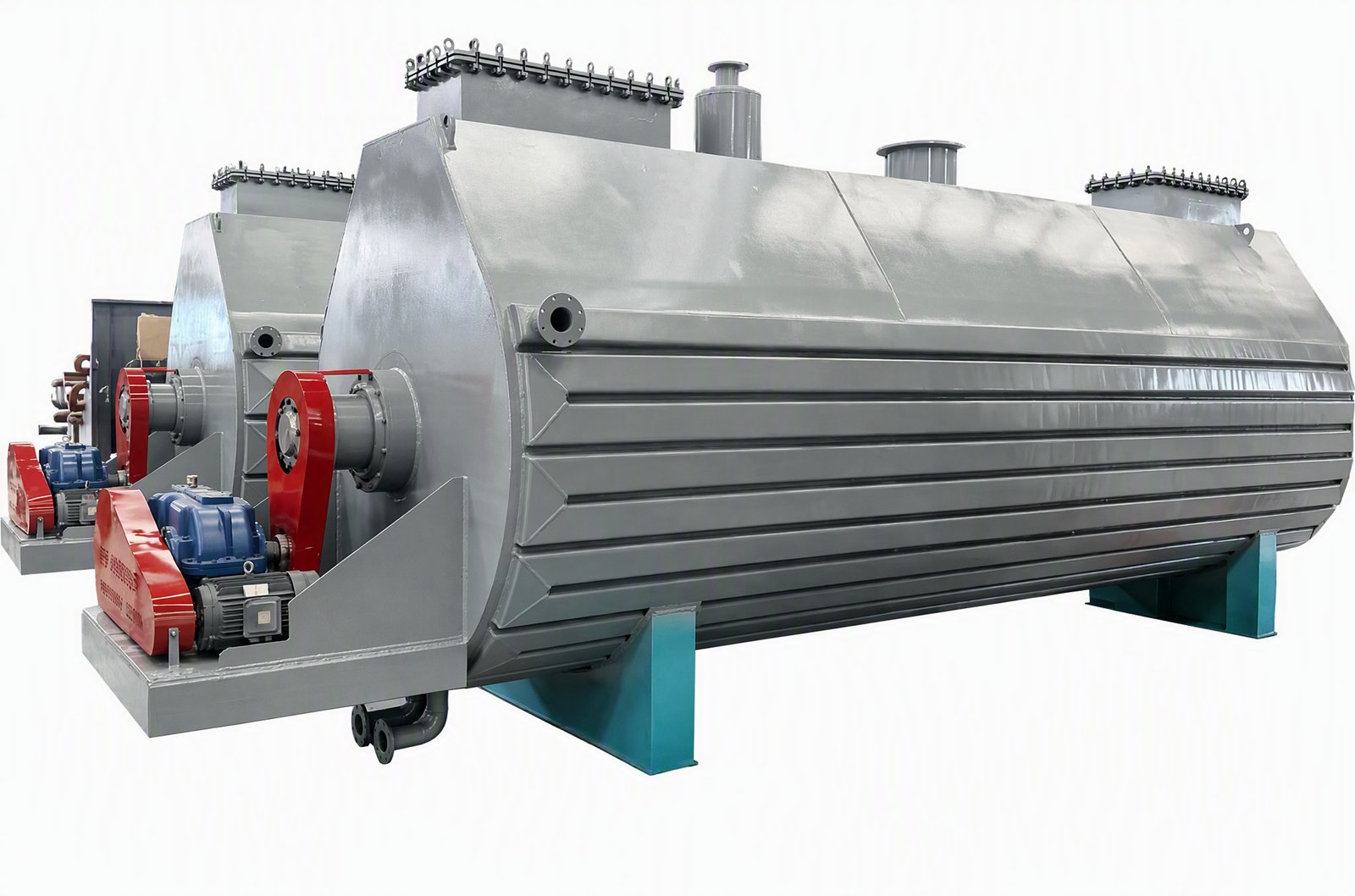
    We build both vessel-type and paddle-type rendering cookers, electrically heated, covering roughly 75–1500 kg/h depending on model — see the animal fat rendering plant page for the configuration we recommend for each material.

    Stage 3: separating fat from solids

    After cooking, the batch is not “fat and waste” — it is fat, water, fine solids and coarse solids all together, and each has to be separated from the others:

    1. Draining. Free fat is drained off the cooker as the first, cleanest stream.
    2. Pressing or centrifuging. The remaining solids still hold fat. A screw press or a decanter centrifuge recovers it. A decanter gives continuous separation of solids from liquid, which is what makes continuous lines possible.
    3. Polishing. The recovered fat still carries water and fine solids. Settling tanks, heating and further separation clean it up before storage or refining.

    Get this stage wrong and you lose fat in two directions at once: left in the solids leaving the plant, and left as sludge in the tanks.

    Stage 4: drying and finishing the solids

    The de-fatted solids are not waste. They are dried, and depending on the material they are ground and screened into meat and bone meal. That line is a plant in its own right — bone crushing, cooking and degreasing, drying, grinding and screening — see meat and bone meal processing. Moisture content and particle size both affect the value of the finished meal, so the drying and grinding stages need the same attention as the fat side of the plant.

    Fat quality: what actually decides the grade

    Fat is graded on a small number of measurable properties, and they are all influenced by the process rather than by the raw material alone:

    • Free fatty acid content. Rises with time, temperature and moisture. Fast processing at lower temperature keeps it down.
    • Moisture and impurities. Residual water drives hydrolysis and rancidity. Good separation and drying are the fix.
    • Colour and odour. Largely a function of heat exposure and oxidation — the reason vacuum and low-temperature wet rendering exist.

    Edible-grade fat needs a line designed for it from the start: controlled-temperature rendering, careful separation, and refining and dehydration afterwards. Technical-grade fat can be produced on a simpler plant, but you cannot upgrade a technical line into an edible one simply by running it more slowly. For the edible route see edible lard rendering.

    Where rendering plants go wrong

    Most underperforming rendering plants fail in the same handful of places. If you are specifying a new line or troubleshooting an existing one, these are worth checking in order.

    • Undersized separation. The cooker gets all the attention and the decanter or press gets whatever budget is left. But separation is where fat is actually recovered, and a plant with slow separation backs up the cooker and loses fat into the solids. If fat in the meal is high, the press or centrifuge is the first suspect.
    • Inadequate drying of the solids. Meal leaving the plant too wet loses value, clogs grinding equipment and can go mouldy in storage. The drying stage has to match the cooker’s output, not just be present.
    • Heat supplied on paper only. The steam boiler or electrical supply is treated as an external matter and turns out to be marginal. A render cooker that cannot reach and hold its temperature produces lower-grade fat and a wetter meal, on every batch.
    • Water carried through the whole line. Water is heat you paid for and then have to remove again. Draining free water early, and keeping material out of the rain, is free capacity.
    • No temperature discipline. Running hotter to go faster raises free fatty acid content, darkens the fat and reduces its grade. For edible product this single habit can cost more than the equipment it was meant to speed up.
    • Material mix drifting from the specification. A line designed around beef trimmings and fed poultry offal will separate differently, dry differently and produce a different grade of fat.

    None of these are exotic failure modes. They are all specification and operating decisions, which is why it matters to describe your material and your target grade before the equipment is chosen rather than after it is installed.

    What the line looks like end to end

    Size reduction, cooking, fat separation, fat polishing, solids drying and grinding, with conveying and steam supply tying it together — an industrial steam boiler normally provides the heat, and screw conveyors move material between stages.

    Tell us the material, the volumes and whether you are targeting edible or technical grade, and we will propose the configuration. Request a quote, or start with the equipment range.

  • Vegetable Oil Extraction: Pressing vs Solvent Extraction

    Vegetable Oil Extraction: Pressing vs Solvent Extraction

    There are only two ways to get vegetable oil out of an oilseed at industrial scale: press it, or dissolve it out with a solvent. Everything else — the conveyors, the cookers, the filters, the tanks — exists to support one of those two routes. Choosing between them is the first real decision in an oil plant project, and it shapes the capital cost, the site, the staffing and the product you can sell.

    Step one: prepare the seed, whichever route you choose

    Neither route works on seed straight from the sack. Preparation is where a large part of the oil recovery is actually won or lost:

    • Cleaning. Stones, sand, plant matter and metal have to come out. A stone that reaches a press damages the screw; metal damages the gearbox.
    • Dehulling. Removing hulls raises the oil content of what goes into the press and keeps hull material out of the meal.
    • Cracking and flaking. Seed is broken and rolled into flakes so that oil cells are exposed. Flake quality is one of the most underrated variables in a pressing plant.
    • Conditioning and cooking. Heat and moisture are adjusted before pressing. Hot pressing generally releases more oil than cold pressing on the same material, at the cost of a darker, more processed oil.

    If your material is soft, high-oil and easy to press, preparation can be simple. If it is fibrous or hard, preparation is where the engineering effort goes. We supply cleaning, conveying and conditioning machines alongside the presses themselves — see the auxiliary equipment range.

    Route one: mechanical pressing

    A screw press squeezes the prepared material through a rotating worm inside a cage. Oil drains out through the cage bars; the remaining solids leave as cake.

    Within mechanical pressing there are two common operating modes:

    • Full pressing (single pressing). The press takes out as much oil as it can in one pass. The line is comparatively simple, the capital cost is lower, and there are no solvents on site. This is how most first plants start.
    • Cold pressing. The material is pressed without the usual heating step. Yields are lower, but the oil retains more of its natural character — which matters if you are selling a premium edible oil rather than a commodity.

    The by-product is cake or meal, which in most plants is a saleable product rather than waste. Its value partly depends on how much oil is left in it, which is why buyers of meal and buyers of oil care about different numbers from the same press.

    Route two: pre-pressing followed by solvent extraction

    In a solvent plant, the press does not try to remove all the oil. It removes part of it as a pre-press, and the partially de-oiled cake goes on to be washed with solvent, which dissolves the remaining oil. The solvent is then recovered and recycled, and the meal is desolventised before it leaves the plant.

    This route recovers more of the oil in the seed, and it is the standard approach where large volumes of a single material are processed continuously. The trade-offs are real:

    • Complexity. A solvent plant is a chemical process plant, not a workshop of machines. It needs far more engineering, instrumentation and control.
    • Scale. The economics only work above a substantial throughput. Below that, the additional recovery does not pay for the additional plant.
    • Site and permissions. Solvent handling brings safety, fire and environmental obligations that vary by country and are much heavier than for a press alone.
    • People. It needs operators with process training, not machine operators.

    How to choose

    Work through these in order:

    1. What is your throughput? Below a certain size, mechanical pressing is the only route that makes sense economically. Ask a supplier to show you where that boundary sits for your material rather than assuming.
    2. What are you selling? Premium cold-pressed oil, commodity crude oil, cake for feed, or meal — each points at a different route.
    3. What can the site support? Solvent storage, fire separation, effluent handling and a larger electrical supply all have to exist before the plant can be built.
    4. How much can you operate? A simple pressing line can be run by a small team. A solvent plant cannot.
    5. Do you expect to expand? If you may scale later, specify the pressing stage so the press can later run as a pre-press. That single decision can save you buying the front end twice.

    What each route means for your product and your plant

    It is tempting to treat the two routes as two ways of producing the same thing. They are not. The route you choose changes what you sell, what you need on site, and what your running costs look like.

    • The meal. Solvent extraction takes more oil out of the cake, so the meal leaves at a lower residual oil content — normally what a feed buyer importing to a specification is looking for. A full-pressing plant leaves more oil in the cake, which raises its energy value but may put it outside a low-oil specification. If your business model is meal exports, this single point can decide the route for you.
    • The oil. Pressed oil, and especially cold-pressed oil, retains more of the material’s natural character. Solvent-extracted oil has been through more processing and normally needs more refining before it is saleable as edible oil. If you are selling a premium or branded oil, pressing is usually the right front end.
    • The site. A pressing line is a workshop. A solvent plant is a chemical process plant: solvent storage, fire separation, vapour handling, effluent treatment, instrumentation and a substantially larger electrical supply. Some sites simply cannot host one, whatever the economics say.
    • The people. Pressing lines are run by machine operators who can be trained on site. Solvent plants need process operators and a maintenance capability that most first-time plant owners do not have.
    • The cost structure. Pressing trades lower capital for higher cost per tonne of oil produced — more wear parts, more maintenance, more oil left in the cake. Solvent extraction trades much higher capital and compliance cost for better recovery. The crossover depends on throughput, and it is worth asking a supplier to model it for your tonnage rather than assuming.

    The equipment each route implies

    Mechanical pressing: intake and cleaning, cracking and flaking where the material needs it, conditioning or cooking, the screw press or presses, oil filtration or settling, cake conveying and storage, and tanks for crude oil. Everything on that list is workshop equipment, and it can be built up in stages as the business grows.

    Pre-pressing plus solvent extraction: the same front end, followed by extraction, solvent recovery, desolventising and toasting of the meal, plus the safety and effluent systems that go with solvent handling. The front end is smaller than in a full-pressing plant, but nothing downstream of it can be added later without rebuilding.

    That is the practical argument for specifying the pressing stage generously even if you start with full pressing: it is the one part of the plant that can serve both routes.

    What happens after extraction

    Whichever route you take, the oil that comes out is crude oil. It still carries gums, colour bodies, free fatty acids and odour compounds, and it has to be filtered or refined before most buyers will take it. Crude oil can be sold, but the price is lower and the buyer pool is narrower.

    Our process solutions pages set out how pressing, filtration, refining and waste-oil treatment fit together, and the equipment range lists the machines that make up each stage. If you tell us the material and the product you want to sell, we can tell you which route fits and what it needs. Request a quote.

  • How to Calculate Oil Press Capacity for Your Line

    How to Calculate Oil Press Capacity for Your Line

    Most disagreements about oil press sizing come down to people measuring different things. One buyer means kilograms of seed going in; another means litres of oil coming out; a third means tonnes per day. Until everyone is measuring the same quantity, the numbers cannot be compared — and a press that looked correct on paper turns out to be the wrong size on site.

    This is how to work out the capacity you actually need, in the order the arithmetic has to be done.

    1. Decide what you are counting

    Three different numbers get called “capacity”, and they move in different directions:

    • Seed throughput. Kilograms of raw material pushed through the press per hour. This is the number press manufacturers quote, and it is the only one you can compare like for like.
    • Oil output. How much oil you get out. It depends on the oil content of the seed, the preparation, and how the press is set — so it is always lower than the throughput number, never equal to it.
    • Cake output. What is left after pressing. In most plants the cake is a saleable product, not waste, and its quantity matters as much as the oil.

    Write down which of the three your business actually depends on. If you are paid for oil, size on oil; if you are selling cake or meal to a feed buyer, the cake volume constrains you just as hard.

    2. Convert between kg/h and tonnes per day properly

    Manufacturers quote kg per hour. Project plans are written in tonnes per day. The conversion is trivial — but only if you use the hours the plant really runs.

    The mistake is assuming 24 hours. A single-shift operation runs eight. Even a three-shift plant loses time to cleaning, die changes, maintenance and start-up. A realistic working figure for a well-run plant is the scheduled shift hours minus allowances, not the clock on the wall.

    • 8-hour shift → multiply kg/h by 8
    • Two 8-hour shifts → multiply by 16
    • Three shifts with allowances → treat it as roughly 20–22 working hours, not 24

    An 800 kg/h press is not “19 tonnes a day”. On one shift it is about 6.4 tonnes, and the difference between those two numbers is the difference between buying one press and buying three.

    3. Work back from the throughput you need

    Once you know the shift pattern, the calculation is one line:

    Required press capacity (kg/h) = target material per shift (kg) ÷ working hours per shift

    Worked example. You want to process 6 tonnes of seed in one 8-hour shift. That is 6,000 kg ÷ 8 h = 750 kg/h of material through the press. Looking at a range with rated capacities of 200 kg/h, 250–300 kg/h and 600–800 kg/h, the answer is the largest model — a single 6YL-218, which covers 600–800 kg/h. The 6YL-160 at 250–300 kg/h would need three units running in parallel to reach the same figure, which usually costs more in floor space, wiring and labour than one larger press.

    If you need 20 tonnes a day over two shifts, the arithmetic gives 20,000 kg ÷ 16 h = 1,250 kg/h — two 6YL-218 units, and a plant layout that can feed both.

    Note what the arithmetic does not include: the rated figure is a ceiling under good conditions on a favourable material. Ask the supplier for the throughput on the seed you will actually be pressing before you commit to a number. See the press models we build for the capacities we quote.

    4. Size the line, not just the press

    A press running at its own capacity is useless if the machines either side of it cannot keep up. The usual chain is cleaning, conditioning, pressing, then filtration or conveying — and every stage has its own throughput figure.

    • Cleaning. A vibrating screen in this class runs at roughly 500–800 kg/h. A single unit covers a press of similar throughput; a two-press line normally needs two, or a wider screen.
    • Conveying. Screw conveyors have to move the cake volume as well as the seed, and cake behaves differently from seed. Size the conveyor on the harder material, not the easier one.
    • Filtration and storage. Crude oil arrives carrying foots, and the settling or filtration stage sets how fast you can empty the press’s oil outlet. If it backs up, the press slows with it.

    The practical rule: find the slowest machine in the chain, because that is the capacity of your plant. Buy the line as one specification rather than a set of unrelated machines — the auxiliary equipment has to be matched to the press, not chosen after it.

    5. Common sizing mistakes

    • Using 24 hours a day. Nobody runs 24 productive hours. The plant that does not stop does not maintain itself either.
    • Treating the nameplate as a guarantee. Rated capacity assumes prepared material and a correctly set press. Ask for the figure on your material.
    • Sizing for the best day, not the average day. Harvest arrivals are lumpy. Some headroom is worth paying for; a plant that cannot clear its intake in season loses material.
    • Oversizing for safety. A press run far below capacity recovers less oil per hour and wears faster than one run near its design point. One step of headroom is sensible; two is expensive.
    • Forgetting the oil, not just the seed. If your target is a daily volume of finished oil, convert that target back through the oil content — the seed tonnage you need is always larger than the oil tonnage you want.

    How oil content changes the arithmetic

    There is one more step that catches buyers out: the gap between how much seed you process and how much oil you produce. Those two numbers are never the same, because a large part of every oilseed is not oil — it is meal, hull and moisture, and it all has to pass through the press.

    Oil content varies widely between oilseeds, and it also varies within one species depending on variety, growing conditions and how dry the material was at intake. So the same press running the same throughput can give you very different daily oil volumes depending on what you feed it. Do the calculation in whichever direction your business actually works:

    • Sizing on seed. You know how much material you can buy, store or harvest. Size the press on that tonnage and accept whatever oil volume follows.
    • Sizing on oil. You have a contract or a target volume. Divide the oil you need by the oil content of your material to get the seed tonnage you must process, then divide by working hours to get kg/h.

    The second direction is the one that surprises people. A target that sounds modest in litres of oil can demand considerably more seed tonnage than expected, because the press is handling the whole seed, not only the oil inside it. Three practical consequences:

    • Ask for the oil content of the actual material you will buy, not the textbook value for the species.
    • Re-run the sizing if you change supplier or origin. A different oil content is a different plant requirement.
    • Plan storage for the cake as well as the oil. In most oilseeds the cake stream is the bulkier of the two.

    And remember that no press extracts every drop. A proportion of the oil stays in the cake, and how much depends on the material, the preparation and the press settings. Treat a rated capacity as a throughput figure for the press, and treat the oil output as a separate, lower number to be confirmed for your specific case before you sign anything.

    Get the number checked

    Send us the material, the working hours and the output you are targeting, and we will come back with a press model and the machines that go either side of it. If you tell us the seed and the shift pattern, the sizing is straightforward arithmetic — and it is much cheaper to do it here than after the equipment has been delivered. Request a quote, or look through the equipment range first.

  • How to Choose a Screw Oil Press: A Practical Buyer’s Guide

    How to Choose a Screw Oil Press: A Practical Buyer’s Guide

    A screw oil press is usually the first machine a buyer specifies — and the one most often specified wrongly. The model that looks strongest on a specification sheet is not necessarily the one that fits your raw material, your throughput, or the machines sitting either side of it. This guide sets out the decisions in the order they actually matter.

    1. Start from the material, not the catalogue

    Screw presses are sold by material, because the same machine behaves differently on different oilseeds. Before you compare models, write down four things:

    • The material. Soybean, rapeseed, peanut, cottonseed, sunflower seed, corn germ, sesame, copra or palm kernel — each presses differently.
    • Cold or hot pressing. Cold pressing keeps the oil at low temperature and suits premium edible oil; hot pressing conditions the material first and generally releases more oil.
    • The oil content of the material. High-oil material needs more torque and different screw geometry than low-oil material.
    • The condition of the material on arrival. Whether it is clean, dry and uniform, or needs cleaning, cracking, flaking or cooking before it can be pressed at all.

    A press sized for sunflower seed will not automatically suit copra or palm kernel. A supplier who quotes a model before asking what you are pressing is quoting a catalogue rather than a solution.

    2. Size the press against the throughput you need, not the biggest number

    Press capacity is quoted in kilograms of material per hour, and it is one of the few figures that is directly comparable between models. What matters is the throughput on your material, not the throughput on whatever material the brochure was written around.

    Model Typical capacity Power Where it fits
    6YL-100 200 kg/h 7.5 kW Small workshops and pilot lines
    6YL-160 250–300 kg/h 30 kW The usual starting size for a commercial pressing line
    6YL-218 600–800 kg/h 45 kW Higher-volume lines and pre-pressing duty

    Two cautions. First, a rated figure is a ceiling under good conditions, not a promise for your material — ask the supplier to state the throughput for the seed you are actually pressing. Second, do not oversize for comfort. A press run well below its capacity gives you worse oil recovery per hour, more wear and a line that is harder to control. Size to your real target, then allow one step of headroom, not two.

    3. Decide between single pressing and pre-pressing

    There are two ways to get oil out of an oilseed, and the choice affects every machine you buy afterwards.

    • Single pressing (full pressing). The screw press takes out as much oil as it can in one pass. Capital cost is lower and the line is simpler. It suits smaller capacities, higher-value specialty oils, and buyers who do not want to run a solvent plant.
    • Pre-pressing followed by extraction. The press removes part of the oil and the cake goes on to solvent extraction. Recovery is higher, but the plant is far more complex and generally only makes sense at large scale.

    Most buyers building a first line start with single pressing and then refine the crude oil they produce. If you expect to scale, it is worth specifying the pressing stage so that the press can later run as a pre-press. Our process solutions pages set out how the stages fit together.

    4. Compare presses on the things that decide your running cost

    Two presses with the same nominal capacity are not the same machine. Ask about:

    • Wear parts. The screw shaft, pressing worm and cage bars wear first. Ask what material they are made of, whether hardened sections are used, what a replacement set costs and how long it lasts.
    • Residual oil in the cake. This is the real measure of performance. It is material-dependent, so ask for a figure for your specific oilseed — and ask how that figure was measured.
    • Drive and gearbox. A press is only as reliable as what turns it. Ask which gearbox is fitted and whether spares are available in your region.
    • Temperature control. Hot pressing needs stable temperature control; without it, both oil quality and throughput drift.
    • Spares and turnaround. A press standing idle for three weeks waiting for a part costs more than the part.

    5. The press is only one machine in the line

    The most common mistake is buying a press and then discovering it cannot be fed, or that the oil it produces cannot be sold. A working oil pressing line normally includes:

    • Cleaning. A vibrating screen removes stones and plant matter; at this scale a 500–800 kg/h unit is typical.
    • Conditioning. Heating and moisture control before the press.
    • Pressing. The screw press itself.
    • Filtration or settling. Crude oil carries foots that have to come out before it is stored.
    • Conveying. Screw conveyors move material between stages; U-type screw conveyors are standard for seed and cake.
    • Refining, if you are selling edible oil. Degumming, bleaching and deodorising turn crude pressed oil into a saleable product.

    You can buy these machines one at a time, or buy a line that was designed as one system. Buying separately looks cheaper on paper and usually costs more in commissioning time, because nobody owns the interfaces between the machines. Every machine we supply is built to run inside the line it was specified for — see the equipment range for the machines that make up a complete pressing and refining line.

    6. Questions to put to any supplier

    1. What throughput will this model achieve on my material?
    2. What residual oil should I expect in the cake, and how is that measured?
    3. Which parts wear, how often are they replaced, and what do they cost?
    4. What does the press need upstream and downstream in order to work?
    5. What is the installation and commissioning arrangement, and who pays for travel?
    6. What does the warranty cover in practice?
    7. Can you give me a reference project running on a similar material?

    A supplier who can answer all seven without going away to check is worth talking to. A supplier who cannot answer the first two is not selling you a press; they are selling you a box.

    7. Common mistakes

    • Buying on capacity alone. Capacity tells you how fast a machine can run, not what it produces.
    • Forgetting the auxiliary equipment. Cleaning, conveying and filtration are not optional extras — the line does not run without them.
    • Ignoring the material. The same press on two different oilseeds behaves like two different machines.
    • Buying the cheapest wear parts. Replacement screws are where a cheap press becomes an expensive one.
    • Not planning for the oil you produce. Crude pressed oil still has to be filtered or refined before anyone buys it.

    Frequently asked

    How much oil does a screw press recover?

    It depends on the oilseed, how the material was prepared, and how the press is set up and run. There is no single figure that applies across materials, so treat any supplier who quotes one number for all oilseeds with caution. Ask instead for the residual oil in the cake for your specific material, and ask how it was measured.

    Can one press handle several different oilseeds?

    Mechanically, often yes — but it will not perform equally on all of them, and switching material normally means changing settings and sometimes parts. If you intend to press more than one oilseed, say so when you specify the machine, so that the supplier configures it for the range you actually intend to run.

    How long does installation take?

    It depends on the size of the line and how much site work the buyer does. A single press and its auxiliary machines is a short installation; a complete pressing and refining line takes considerably longer, and needs foundations, power and water in place first. Ask for the commissioning plan in writing before you order, not after the crates arrive.

    Do I need refining equipment as well as a press?

    Only if you intend to sell edible oil. Pressing produces crude oil, which still carries foots, gums and odour compounds. If your buyer accepts crude oil, filtration may be enough; if you are packaging edible oil, you will need degumming, bleaching and deodorising as well.

    Tell us what you are pressing

    Send us the oilseed or fat you will process, the throughput you are targeting, and the finished product you want to sell. Our engineers will come back with the press model, the machines that go either side of it, and a plant layout. If you already know which model you need, the equipment range lists the presses and the auxiliary machines we build.

    Request a quote — or message us on WhatsApp and we will reply with a configuration for your material.